

The Warm Homes Plan sets out the government’s long-term approach to improving the energy efficiency of homes, reducing energy bills and accelerating the transition to low-carbon heating.
Published in January 2026, the Plan commits £15 billion of public investment to support upgrades in up to five million homes, help lift up to one million households out of fuel poverty and create up to 180,000 additional jobs in energy efficiency and clean heating by 2030. The government estimates that this public funding will help unlock around £38 billion of total investment.
For energy assessors and retrofit professionals, the scale of the Plan signals growing long-term demand for trusted property assessments, retrofit advice, technical coordination and quality-led delivery.
ACCESS THE FULL WARM HOMES PLANWhere does the Warm Homes Plan apply?
The Warm Homes Plan sets out a UK-wide ambition to improve homes, reduce energy bills and support the transition to clean heating. However, delivery varies across the four nations.
In England, this includes programmes such as the Warm Homes: Local Grant and the Warm Homes: Social Housing Fund. The Boiler Upgrade Scheme and new minimum energy efficiency standards for privately rented homes apply in England and Wales.
Scotland, Wales and Northern Ireland have devolved responsibility for key areas of housing and energy policy and operate their own energy efficiency and clean-heating programmes.
Warm Homes: Local Grant
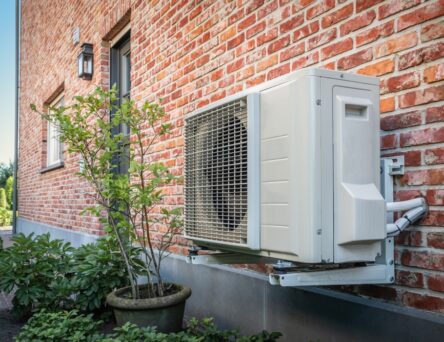
The Warm Homes: Local Grant supports eligible low-income households living in privately owned and privately rented homes in England.
Local authorities can use the funding to install measures including insulation, solar panels, smart controls and clean heating technologies.
Assessors and retrofit professionals can review the scheme guidance and list of participating local authorities to identify potential delivery opportunities in their area.

Warm Homes: Social Housing Fund
The Warm Homes: Social Housing Fund supports local authorities, housing associations and other eligible social landlords to improve social homes across England.
Applications for the current funding round are closed, but successful projects are being delivered until September 2028.
Assessors and retrofit professionals can review the list of social housing landlords that received funding and explore potential delivery opportunities.
Boiler Upgrade Scheme
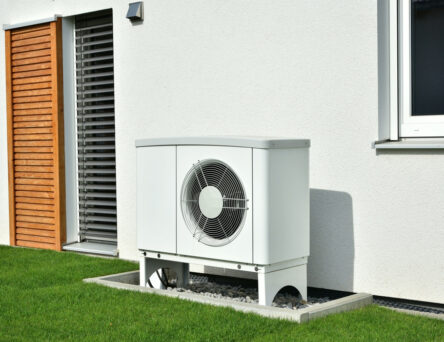
The Boiler Upgrade Scheme (BUS) provides upfront grants towards eligible low-carbon heating systems in existing buildings in England and Wales. Standard grants are £7,500 for air-to-water and ground-source heat pumps, £2,500 for air-to-air heat pumps and £5,000 for eligible biomass boilers. From 21 July 2026 to 31 March 2027, eligible off-gas-grid properties replacing oil or LPG heating can receive £9,000 towards an air-to-water or ground-source heat pump.
The Warm Homes Plan expands BUS funding to £2.7 billion to 2030 and broadens the technology offer. For energy assessors and retrofit professionals, this may create opportunities to support heat-loss calculations, system design inputs, retrofit advice and the wider planning of clean-heating installations.
Applications are made through an MCS-certified installer, who applies for the grant on the property owner’s behalf.
Universal finance and the Warm Homes Fund
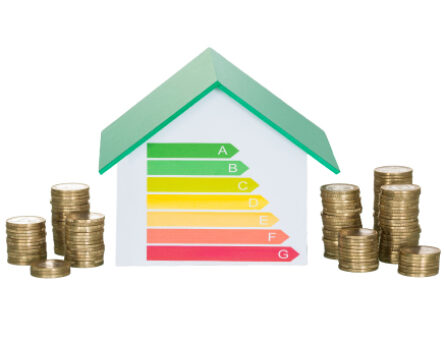
Alongside targeted grants, the Plan includes an initial £2 billion of government support for zero- and low-interest consumer finance. The proposed offer is intended to help homeowners fund solar panels, batteries, heat pumps and packages of home improvements, including by combining finance with a BUS grant.
The government also plans to establish a strategic partnership with the green home finance sector to widen access to suitable finance and support a longer-term, self-sustaining market for home upgrades.
Solar, batteries and flexible energy
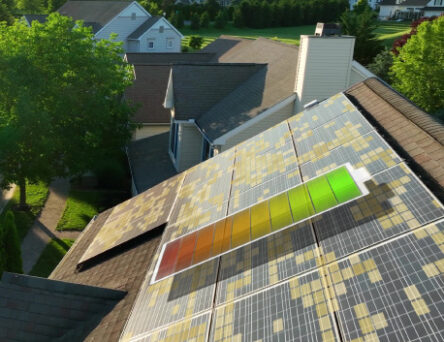
The Plan prioritises rooftop solar, home batteries, clean heating and smart flexibility alongside insulation and other fabric measures. It aims to make these technologies available not only through targeted schemes for low-income and social-rented households, but also through the universal finance offer.
A related July 2026 policy development enables compliant plug-in solar products to be sold and used in the UK under an interim product specification. The regulations were made on 16 July 2026 and come into force on 27 August 2026. Plug-in solar is a separate policy measure, but it supports the Plan’s wider objective of making household clean-energy technologies more accessible.
Warm Homes Agency
The government plans to establish a new Warm Homes Agency to support and coordinate delivery of the Warm Homes Plan.
The Agency is intended to consolidate responsibilities currently spread across different organisations – Salix along with functions from DESNZ and Ofgem will be brought into a single executive agency and will work with local delivery partners to provide consumers with clearer information and support.
Subject to agreement with the devolved governments, it may operate at both national and local level across the UK. Its responsibilities are expected to include scheme delivery, local coordination, consumer advice and oversight of consumer protection.
Minimum energy efficiency standards for rented homes
The Warm Homes Plan links home-upgrade investment with higher minimum energy efficiency standards for rented homes. In the private rented sector in England and Wales, the government intends to require properties to meet the equivalent of EPC C by 1 October 2030, using reformed EPC metrics. The confirmed approach requires the fabric performance metric to reach the required standard, plus either the heating-system or smart-readiness metric, at the landlord’s discretion. A £10,000 cost cap and exemptions will apply, subject to legislation.
For social housing in England, the government response published in April 2026 confirms a phased standard: homes must reach EPC C or above against any one of the three reformed metrics by 1 April 2030, and against a second metric by 1 April 2039, unless an exemption applies.
EPC reform and measured performance
The Warm Homes Plan confirms that Energy Performance Certificates (EPCs) will be reformed so they provide more useful information and better recognise home electrification and clean-energy technologies.
The government has confirmed the direction of EPC reform in England and Wales through a partial response and further consultations. Reformed domestic EPCs are expected to report several metrics, including fabric performance, heating-system performance and smart readiness, rather than relying on a single headline measure. Detailed methodology, band boundaries and implementation arrangements remain subject to further policy and technical development.
The Plan also highlights the potential role of measured building-performance information in improving retrofit decisions, identifying defects and evaluating the effect of completed work. Elmhurst members should continue to monitor changes to EPC methodologies and the implications for their area of work.
Quality and consumer protection
The Warm Homes Plan places significant emphasis on installation quality, accountability and consumer confidence.
For energy-efficiency measures delivered under relevant Department for Energy Security and Net Zero (DESNZ) schemes, installers must be certified to PAS 2030, installations must comply with PAS 2035 and installers must be TrustMark registered or meet equivalent requirements.
Under the PAS 2035 process, the retrofit designer is responsible for ensuring that selected products are appropriate and comply with Building Regulations. Relevant microgeneration technologies must also meet the applicable Microgeneration Certification Scheme requirements.
In June 2026, DESNZ opened a consultation on reforming consumer protection for home-upgrade schemes. Proposals include a single end-to-end consumer protection service, binding delivery agreements, a government-owned data system to identify risks earlier and a public register of approved installers and retrofit professionals. The consultation closes on 10 September 2026.
Workforce, skills and supply-chain growth
The Plan includes measures to expand the workforce and domestic supply chain. These include increasing Heat Training Grant funding in England to £7 million a year until March 2029, developing retrofit apprenticeships and reviewing how competence is defined for PAS roles, while maintaining safety and quality. The Plan also triples the Heat Pump Investment Accelerator Competition to £90 million and extends the Heat Pump Ready innovation programme by up to £30 million.
The government’s ambition is for the UK heat-pump market to reach more than 450,000 annual installations by 2030. This scale-up reinforces the need for competent assessment, design, installation, coordination and quality assurance.
What the Warm Homes Plan means for energy assessors
Delivering improvements across millions of homes requires a skilled and trusted workforce. The Warm Homes Plan brings demand across areas such as Energy Performance Certificates, retrofit assessment and coordination, heat-loss calculations, ventilation and airtightness testing, the assessment of older and traditional buildings, and quality assurance.
The qualifications and competency requirements vary depending on the funding programme, technical standards and procurement route. Where PAS 2035 applies, assessment, design, installation, monitoring and evaluation must be coordinated through the appropriate whole-house retrofit process.
To prepare for these opportunities, assessors and retrofit professionals should maintain the right accreditation, insurance and technical competence, keep up to date with EPC reform and rental standards, and monitor work commissioned by local authorities, housing associations and delivery partners.
Elmhurst members can view current vacancies and contract opportunities across energy assessment, retrofit and the wider energy efficiency sector through our Opportunities for Members page.
EXPLORE OPPORTUNITIESDevelop your retrofit skills
The transition to locally delivered retrofit and increased scrutiny of quality is likely to place greater emphasis on demonstrable competence.
Elmhurst provides training and accreditation for professionals looking to develop their skills in retrofit assessment and coordination, helping them prepare for work delivered under PAS 2035 and wider funded retrofit programmes.
RETROFIT ASSESSOR TRAINING RETROFIT COORDINATOR TRAINING
Last reviewed: July 2026