

Elmhurst’s Damp and Mould Assessor Training equips you with the practical skills to competently assess damp and mould hazards in domestic properties and produce clear, professional reports.
Elmhurst’s Damp and Mould Assessor Training is designed to build the practical competence needed to identify damp and mould risk, understand how ventilation and building performance contribute, and produce professional reports.
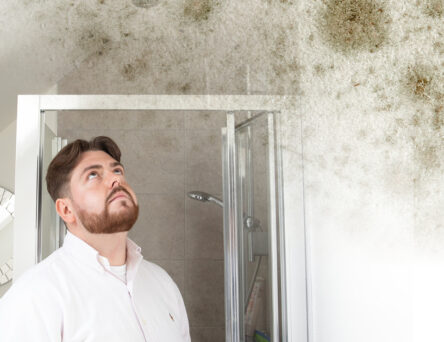
Damp and Mould Assessor Training
£495 + VAT
- Duration: 1 Day
- Format: Remote online learning led by our expert trainers – study from your home or the office
- Competency Test: At the end of the course, you’ll complete a 30-minute, multiple-choice competency assessment to confirm your understanding of the content.
- Suitable for: DEAs, surveyors, stock condition surveyors, retrofit professionals, housing practitioners, or professionals responsible for investigating moisture issues within properties

Why become a Damp and Mould Assessor?
Respond to increasing legislative demand
With the introduction of Awaab’s law in England and similar legalisation in Scotland, the hazards of damp and mould within properties have been brought to the forefront of the industry.
Broaden your service offering
If you are already a DEA or RA, this is a natural extension, supporting better whole-house decision making for landlords across ventilation, heating, moisture and building performance.
Boost your earning potential
By adding this competency, you can offer additional services that complement your work, helping you take on more jobs and increase your earning potential.
Support healthier, safer homes
Damp and mould can affect residents’ health, comfort and wellbeing. As an assessor, you can help improve living conditions by identifying risks early and supporting landlords with accurate information
Join Elmhurst’s Damp and Mould Competency Scheme
After completing the training, you will be eligible to join Elmhurst’s Damp and Mould Assessor scheme, the first of its kind in the industry, demonstrating your competence and professional standards. You will also gain access to our industry-leading software, technical support, our Find an Assessor directory and insurance cover for your work.
Why are Damp and Mould Assessments required?
Awaab’s Law and Increased Ventilation standard in social rented properties
Awaab’s Law is named after Awaab Ishak, who died in 2020 following prolonged exposure to mould in his family home. The case brought national attention to the consequences of failing to address damp, mould and underlying ventilation issues. The law was introduced as part of the Social Housing (Regulation) Act 2023, establishing clearer expectations for landlords to take prompt action when hazards such as damp and mould are identified. These rules apply to all social rented housing in England and took effect on 27th October 2025, marking a major step forward in improving housing safety standards.
Similar legislation is expected to be introduced in Scotland on 6th October 2026, subject to confirmation. This proposed legislation will introduce similar expectations on both social and private landlords.
Damp and Mould Risk in Retrofit Projects
Damp, mould and condensation findings can inform the ventilation strategy for PAS 2035 retrofit projects, helping to ensure that fabric upgrades and increased airtightness do not lead to unintended consequences such as higher humidity and mould growth. As retrofit measures can reduce background ventilation, ventilation should be assessed and, where necessary, improved to manage indoor air quality and moisture effectively. Where instructed by a Retrofit Coordinator, damp and mould assessors can contribute by identifying moisture and condensation risk factors and providing findings that help inform appropriate ventilation measures.
What’s involved in undertaking a Damp and Mould Assessment?
Damp and mould assessments involve a site visit to the property to assess the condition of the building and the evidence available to understand damp and mould risk, alongside how the home is being used day to day. Typically, this includes:
- Identifying visible mould growth, damp staining and other moisture indicators
- Reviewing the property condition and any contributing defects (for example, ventilation performance, building fabric issues or thermal bridging)
- Considering likely root causes such as heating patterns, moisture generation and ventilation pathways
- Understanding how occupant habits and property use can influence moisture levels (such as drying clothes indoors, window opening, extractor fan use and heating routines)
- Producing clear findings so landlords and residents understand what action is required

Why choose Elmhurst for Training?
Elmhurst’s Damp and Mould Assessor Training is built on our extensive experience in the domestic and retrofit property sector. Delivered by industry experts and backed by the UK’s leading energy assessment accreditation and technical support, our courses give you the confidence to deliver high-quality assessments.
- Leave feeling confident – leave feeling confident that you can put theory into practice and can deliver Damp and Mould Assessments with ease.
- Learn with the support of our expert trainers – our remote course delivery allows learners to receive real time feedback and ask questions on areas you need more clarity on
- An engaging learning experience – Our trainers have the practical experience and know how to deliver a truly engaging learning experience.
- Support beyond your training – Those who go on to join our competency scheme will have access to support for your heat loss assessments, beyond that which is available on the course.
Frequently Asked Questions
No! Our course is open to a range of domestic, retrofit and other property professionals such as:
- Domestic Energy Assessors
- Retrofit Professionals
- Surveyors
- Stock Condition Surveyors
- Housing Practitioners
- Other professionals responsible for investigating moisture issues within properties
Live online (remote), through trainer-led sessions with structured learning and opportunities for Q&A.
Yes, Awaab’s Law has increased urgency and demand for competent identification and reporting of damp and mould hazards in social rented housing.
Yes, damp and mould risk is closely linked to airflow, moisture and building performance, and this is especially important in retrofit contexts.
You can progress towards Elmhurst’s Damp and Mould Competency Scheme, supporting ongoing quality and professional recognition.