
New SMETER guidance: From measurement to action – the future of measured building performance
The Department for Energy Security and Net Zero (DESNZ) has published a new Smart Meter Enabled Thermal Efficiency Ratings (SMETER) Guide, alongside a detailed evidence portfolio and supporting case studies.
The publication explains how measured thermal performance can help housing providers and local authorities make better decisions about retrofit, heating systems and investment, supporting the transition to Net Zero.
The UK Government, CIBSE and the wider industry are establishing the standards, evidence and governance needed to support measured building performance at scale. Elmhurst is already putting this ambition into practice through recognised training, a competency framework and software tools that enable measured Heat Transfer Coefficient data to be used today.
What is a SMETER assessment?
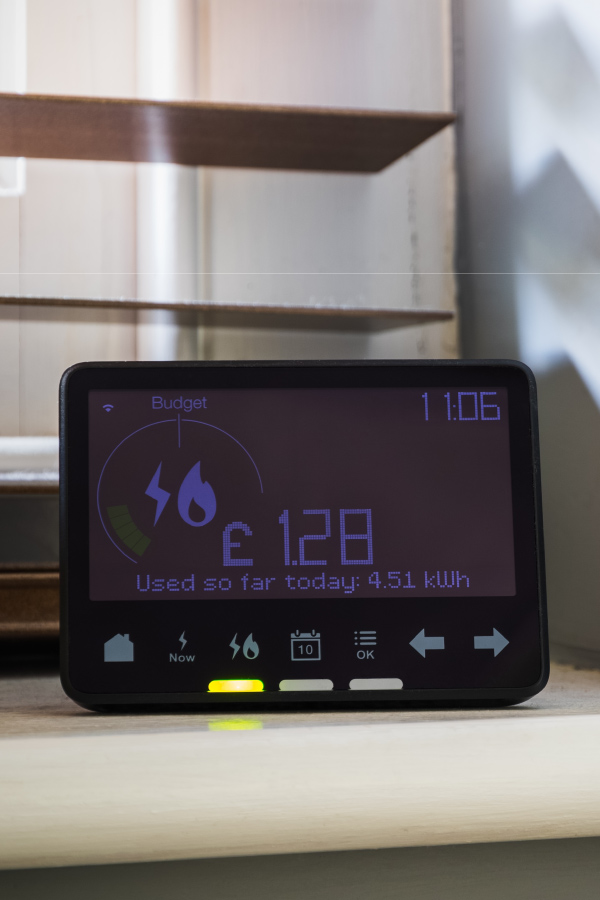
A SMETER assessment measures how well an occupied home retains heat. Most SMETER methods use actual energy data, indoor and outdoor temperatures, and weather information to assess how quickly heat is lost from the building. This is expressed as a Heat Transfer Coefficient (HTC).
A high HTC means the building is rapidly losing heat, whereas a low HTC means it is effectively retaining heat.
A SMETER assessment does not replace an Energy Performance Certificate (EPC) or a detailed building survey. Instead, it provides real-world evidence that can be used alongside modelled assessments, helping assessors compare how a building is expected to perform with how it performs in practice.
The importance of measured performance
For many years, decisions about energy efficiency improvements have relied on modelled assessments and assumptions about a building’s construction and performance.
These assessments remain essential, but factors such as hidden defects, unknown insulation, and air leakage can affect how a building performs in practice. The difference between predicted and measured performance is known as the performance gap.
The Government’s new guidance recognises the growing role of measured data alongside traditional assessment methods. SMETER technologies can use smart meter data, temperature measurements and weather information to determine a building’s HTC, providing real-world evidence of how quickly it loses heat.
This can help housing providers identify which homes may need improvement, choose appropriate measures and check whether completed work has delivered the intended result.
What SMETER data can be used for
SMETER data can support a range of practical applications, from assessing housing stock and identifying homes for retrofit, to selecting appropriate energy efficiency measures and improving heat pump design and sizing. It can also be used to compare performance before and after retrofit work, identify homes that may not be delivering expected levels of warmth or comfort, and support emerging approaches to funding, quality assurance and performance-based finance.
The DESNZ evidence portfolio shows how these benefits are already being demonstrated in practice, with case studies covering:
- Stock assessment and retrofit prioritisation
- Selection of appropriate retrofit measures
- Heat pump design and specification
- Validation of retrofit outcomes
- Improved resident comfort and lower energy bills
- New approaches to retrofit funding and performance assurance
One example is the MEASURED project, delivered by Build Test Solutions, Veritherm UK and Elmhurst Energy, which explored whether measured heat loss could improve heat pump survey and design processes in 56 homes.
The field trial found that traditional heat-loss calculations matched the measured result in only 30% of the homes assessed, with calculations overestimating heat loss in 59% of cases and underestimating heat loss in 11% of cases. This means that, for 70% of the homes assessed, relying on the BS EN12831 calculation alone could have resulted in a heat pump being sized incorrectly. This highlights the potential for measured data to improve heat pump sizing and reduce unnecessary installation costs.
However, measured HTC on its own shows the overall rate of heat loss from a building, but not exactly where that heat is being lost. It should therefore be used to strengthen and calibrate detailed room-by-room calculations, rather than replace the wider heating-system design process. Further investigation, such as airtightness testing, thermal imaging or in-situ U-value measurement, may also be needed to identify where heat is being lost and determine the most appropriate solution.
Supporting future policy and EPC reform
The Government has reiterated its support for the development of SMETER technologies and is exploring how they could be used within future policy, including through the Warm Homes Plan.
The Government has consulted on a voluntary option to record validated and quality-assured SMETER HTC values on future EPCs, alongside an HTC calculated by the Home Energy Model, and (at the time of writing) is currently analysing the responses. DESNZ is also developing the validation and quality-assurance systems needed to support this and other potential applications of SMETER.
Although measured HTC is not currently a general requirement on EPCs, these developments represent an important step towards measured performance data being used alongside traditional modelling, with the potential to improve confidence in retrofit outcomes and help target investment more effectively.
Building confidence through TM71 standards and competency
The publication follows the release of CIBSE TM71: Measuring Heat Transfer Coefficients in Buildings, which provides a common framework for measuring and reporting HTC values across different methodologies.
Together, TM71, the Government’s SMETER guidance and emerging quality assurance frameworks represent an important step forward for the industry, helping to improve standardisation, consistency and confidence in measured building performance.
Elmhurst has long supported the move towards evidence-based assessment through its Measured Energy Performance (MEP) training and competency scheme, which equips energy professionals with the knowledge and skills needed to undertake HTC measurement using recognised methodologies.
Chris Ricketts, Head of Consultancy at Elmhurst Energy, said:
“The publication of the SMETER Strategic Guide is another major milestone in the industry’s journey towards measured building performance. It highlights the growing evidence base showing the value that measured thermal performance can bring to retrofit, heat pump deployment and building performance evaluation.
What is particularly encouraging is the focus on quality assurance, standardisation and governance. As measured energy performance becomes more widely adopted, it is essential that assessors are suitably trained and competent, and that results can be trusted and compared across different methodologies.
The work already undertaken through Elmhurst’s MEP scheme and the publication of CIBSE TM71, provides a strong foundation for developing the skilled workforce needed to support the wider introduction of measured performance into policy, funding and compliance frameworks.”
Turning measured performance into practical decisions
The value of measured performance comes from what happens next. The growing recognition of measured thermal performance is creating opportunities to make better use of building assessment and heat loss calculations.
Elmhurst has already incorporated measured HTC values into several of its software tools:
- Design SAP 10 allows users to enter a measured HTC value and explore how it affects calculated outcomes such as energy ratings and carbon emissions.
- The Elmhurst Heat Loss Calculator can use measured HTC values to refine heat load calculations, giving practitioners an additional evidence point when designing and specifying heating systems.
While national guidance and standards establish how measured performance should be understood and trusted, Elmhurst is helping assessors and designers apply that data within familiar tools and professional processes now.
Looking ahead
The new guidance points towards a future where calculated and measured information are used together: calculations provide a consistent assessment framework, while measurement adds evidence of how an individual building performs in practice.
With smart meters now installed in the majority of homes and environmental monitoring becoming more common, the opportunity to use measured performance at scale is growing. The guidance identifies potential applications across retrofit planning, quality assurance, finance, policy development and EPC reform.
As the industry continues to move from predicted performance towards measured outcomes, wider adoption will depend on the combination of robust methodologies, recognised competency schemes and clear governance frameworks. With the DESNZ guidance, supporting evidence base and CIBSE TM71 now in place, the industry has a stronger foundation for moving measured building performance from specialist testing into more routine decision-making.