
Legionella Risk Assessments: A Strategic Guide for Landlords and Property Managers
As a landlord or property manager, ensuring the safety of your tenants is a fundamental legal obligation. Among the various health and safety requirements, the management of Legionella bacteria in domestic water systems is a critical, yet often misunderstood, responsibility.
Legionella is a type of bacteria commonly found in natural water sources, but it can also colonise man-made water systems such as hot and cold water services, storage tanks, and showers. If contaminated water droplets are inhaled, it can lead to Legionnaires’ disease, a potentially fatal form of pneumonia.
Elmhurst Energy, the UK’s largest independent provider of property professional training, software, and accreditation, has developed this guide to help you navigate your legal duties, understand the risks, and implement a robust compliance strategy.
The Legal Framework: Landlord Responsibilities and Statutory Duties
In the UK, landlords have a statutory duty under the Health and Safety at Work etc. Act 1974 and the Control of Substances Hazardous to Health (COSHH) Regulations 2002 to identify and manage the risk of exposure to Legionella. This applies to all residential rental properties.
HSE ACOP L8 and HSG274 Part 2 Compliance
The Health and Safety Executive (HSE) provides the primary regulatory framework through the Approved Code of Practice L8 (ACOP L8), “Legionnaires’ disease: The control of legionella bacteria in water systems.” This document, supported by the technical guidance in HSG274 Part 2, dictates that “duty holders” (landlords) must:
- Identify and assess sources of risk.
- Prepare a written scheme for preventing or controlling the risk.
- Implement, manage, and monitor precautions.
- Keep records of the precautions implemented.
- Appoint a competent person to help take the necessary measures.
The Impact of the Renters Rights Act and Recent Reforms
The landscape of rental compliance is shifting. With the introduction of the Renters Rights Act and broader UK renting reforms, there is an increased focus on property standards and tenant safety. Recent enforcement cases have seen landlords face significant penalties, including heavy fines and, in cases of extreme negligence, the risk of imprisonment. Ensuring your Legionella risk assessment is current and “suitable and sufficient” is no longer just a recommendation, it is a vital component of your legal defence and professional reputation.
Module 4: In the News – Compliance Alert: The Renters Rights Act
Recent legislative updates, including the Renters Rights Act, have intensified the scrutiny on domestic property safety. The HSE has recently highlighted cases where landlords were prosecuted for failing to manage water hygiene. Negligence in this area can lead to severe legal repercussions, including unlimited fines and custodial sentences. Ensuring your property has a professional Legionella risk assessment is a critical step in meeting these evolving standards.
Understanding Legionella Risks in Domestic Water Systems
Legionella bacteria thrive in specific environmental conditions. Understanding these factors is the first step in effective risk management.
Identifying High-Risk Conditions: Temperature, Scale, and Biofilm
The bacteria multiply most rapidly in water temperatures between 20°C and 45°C. Outside of this range, the bacteria either remain dormant (below 20°C) or are killed (above 60°C). Other risk factors include:
- Stagnation: Water that sits in pipes or tanks for long periods, such as in “dead legs” (redundant pipework) or during property voids, allows bacteria to grow.
- Nutrients: The presence of scale, rust, sludge, or biofilm provides the necessary nutrients for Legionella to proliferate.
- Aerosol Generation: Any outlet that creates a fine spray, such as a showerhead or a spray tap, provides a pathway for the bacteria to be inhaled.
Health Implications: Legionnaires’ Disease and Aerosol Exposure
While everyone is potentially susceptible to Legionnaires’ disease, certain groups are at higher risk, including the elderly, smokers, and those with respiratory or immunosuppressive conditions. Because the disease is contracted through the inhalation of contaminated aerosols, domestic features like showers, whirlpool baths, and even garden hoses must be managed carefully.
Module 2: Risk Factor Checklist – Is Your Property at Risk?
[ ] Does the property have a cold water storage tank?
[ ] Are there any “dead legs” in the plumbing (pipes that lead to nowhere)?
[ ] Is the hot water stored at a temperature below 60°C?
[ ] Has the property been vacant for more than a week?
[ ] Are there old showerheads or taps with significant scale build-up?
If you checked any of the above, a professional risk assessment is highly recommended.
Conducting a “Suitable and Sufficient” Risk Assessment
The HSE requires that a risk assessment must be “suitable and sufficient.” This means it must be a thorough, systematic evaluation of the entire water system.
Defining Competency: Who Can Carry Out an Assessment?
The law does not mandate that a professional must carry out the assessment, provided the landlord is “competent” to do so. However, competency requires a clear understanding of the water system, the biology of the bacteria, and the legal requirements. Most domestic landlords find that using a qualified, third-party assessor provides the necessary expertise and, crucially, the peace of mind that their legal obligations are fully met.
The Assessment Process: From Site Survey to Written Scheme
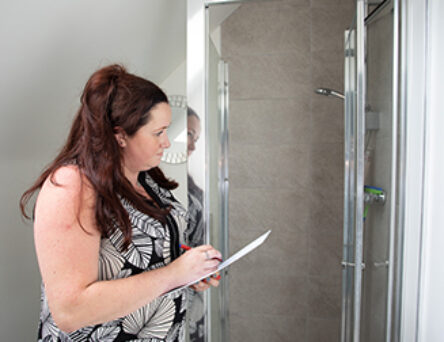
A professional assessment involves:
1. Site Survey: A physical inspection of all water outlets, tanks, and heaters.
2. Temperature Monitoring: Testing water temperatures at various points to ensure they are outside the 20-45°C danger zone.
3. Risk Identification: Highlighting areas of stagnation or potential aerosol generation.
4. The Written Scheme: Providing a clear document that outlines the risks found and the actions required to mitigate them.
Review Periods: When is a Re-Assessment Necessary?
There is no fixed annual requirement for a new assessment, but the HSE states they must be reviewed regularly or whenever there is reason to believe the original assessment is no longer valid. This includes:
- Changes to the water system or its use.
- Changes to the building’s use.
- The availability of new information about risks or control measures.
- If a case of Legionnaires’ disease is associated with the system.
Mitigating Risk: Practical Steps for Landlords and Tenants
Compliance is a shared responsibility. While the landlord must provide a safe system, the tenant plays a role in daily maintenance.
Module 1: Compliance at a Glance
| Landlord Responsibilities | Tenant Responsibilities |
| Conduct a “suitable and sufficient” risk assessment. | Regularly flush through all outlets (taps and showers). |
| Ensure hot water cylinders store water at 60°C. | Clean and descale showerheads every 3 months. |
| Remove redundant pipework (dead legs). | Report any issues with water temperature or flow. |
| Provide tenants with information on risk management. | Inform the landlord if the property will be vacant for long periods. |
Common Misconceptions: Testing vs. Assessment
A common point of confusion for landlords is whether they need to pay for expensive laboratory water testing. For most standard domestic properties, routine water testing is not a legal requirement.
The HSE emphasizes that the focus should be on the risk assessment and the management of temperatures and stagnation. Laboratory testing is generally only required in complex systems, or where a risk assessment identifies a specific concern that cannot be managed through standard temperature controls. Using a competent assessor ensures you are not paying for unnecessary tests while remaining fully compliant.
Professional Compliance with Elmhurst Energy
Elmhurst Energy is dedicated to raising standards across the property compliance sector. Whether you are a landlord seeking an expert or a professional looking to expand your skill set, we provide the tools you need.
- Find an Assessor: Use our directory to find a qualified professional who can provide a “suitable and sufficient” assessment.
- Legionella Training: We offer comprehensive training for those wishing to become competent Legionella Risk Assessors.
- Competency Scheme: Our scheme provides assessors with professional recognition, technical support, and industry-leading software.
- Legionella Software: Our specialized mobile tools streamline the assessment process, ensuring reports meet the highest standards of accuracy and compliance.
Module 3: The Competency Pathway
1. Identify Duty: Recognise your legal responsibility as a landlord or property manager.
2. Appoint Competence: Hire an Elmhurst-accredited assessor or undergo professional training yourself.
3. Conduct Assessment: Perform a thorough site survey and generate a compliant report.
4. Implement Controls: Follow the written scheme to mitigate identified risks.
5. Ongoing Review: Monitor the system and update the assessment when changes occur.
Frequently Asked Questions
Is a Legionella risk assessment a legal requirement for landlords? Yes. Under the Health and Safety at Work Act 1974 and COSHH regulations, landlords have a legal duty to assess and manage the risk of Legionella in their rental properties.
Do I need to test the water for Legionella every year? No. For most domestic properties, a thorough legionella risk assessment is sufficient. Laboratory testing is only necessary in specific circumstances identified by a competent person.
Can I carry out the Legionella risk assessment myself? You can, provided you are “competent” to do so. This means having the technical knowledge to identify risks and suggest control measures. Many landlords choose to take an Elmhurst training course to gain this competency or hire an accredited professional.
What are the penalties for non-compliance with Legionella regulations? Failure to comply can lead to prosecution by the HSE. Penalties include heavy fines and potential imprisonment, especially if a tenant contracts Legionnaires’ disease due to landlord negligence.
How often should a Legionella risk assessment be reviewed? The assessment should be reviewed periodically to ensure it remains valid, or whenever there is a significant change to the water system or the way the property is used.
Does the Renters Rights Act change my Legionella obligations? While the core legal duties remain under the Health and Safety at Work Act, the Renters Rights Act increases the emphasis on property safety and makes it easier for authorities to enforce standards, making compliance more critical than ever.