
Government EPC Accuracy Research Highlights Opportunity to Strengthen Energy Assessment
A new government-commissioned report into Energy Performance Certificate (EPC) accuracy has provided valuable evidence on how domestic energy assessments can continue to evolve and better reflect the performance of homes.

What does the new research cover?
Published by the Department for Energy Security and Net Zero, the research compares modelled energy use with monitored data to understand where differences can arise between EPC predictions and real-world energy use. The findings will help inform future updates to SAP, the development of the Home Energy Model, and wider EPC reform.
For the energy assessment sector, the report should not be seen as a challenge to the value of EPCs. Instead, it shows that EPCs become even more useful when they are supported by accurate, current and property-specific information.
EPCs remain a vital foundation
EPCs were never intended to predict the exact energy use or bills of an individual household. Every home is used differently, and actual consumption will be affected by heating patterns, occupancy, internal temperatures, appliance use and lifestyle.
Their purpose is to provide a standardised assessment, allowing homes to be compared on a fair and repeatable basis.
The government’s research reinforces this distinction. It highlights that differences can occur where assumptions do not fully reflect the specific condition of a building, or where a property has changed since the EPC was produced. This does not undermine EPCs; instead it reinforces the importance of using the best available evidence and keeping assessments up to date when improvements are made.
Why measured and evidenced data matters
One of the most important messages from the research is that EPC accuracy can improve when standard assumptions are replaced with reliable, property-specific evidence. For gas-heated homes, the report found that the difference between modelled and monitored energy use reduced from around 16% to 10.9% when models were updated to reflect more current information, including property changes, weather and occupancy.
In existing homes, assessors will not always have access to full construction details, documentary evidence or measured performance data. In these situations, RdSAP uses default values. These defaults are essential because they allow assessments to be completed consistently and practically across the existing housing stock. However, they are generalised assumptions, and individual homes can perform differently from what those assumptions suggest.
This is a constructive finding for the sector. It shows that where better evidence is available, the EPC can more accurately reflect the actual property, helping to produce more representative outputs and more useful recommendations.
Improving EPC Accuracy using measured and evidenced data
One of the most constructive messages from the report is that EPCs can become more accurate when they are supported by current, verifiable information. Measured evidence can help reduce reliance on assumptions and ensure the assessment better reflects the property as it stands at the time.
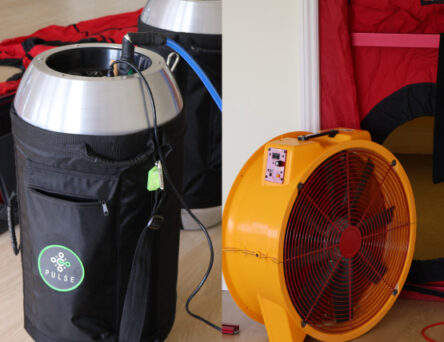
Airtightness Testing
For example, an air pressure test can provide measured information about how much air leaks through the building fabric. In a standard assessment, air permeability may need to be estimated based on the age and type of property. A measured airtightness result gives a more accurate indication of heat loss through uncontrolled ventilation.
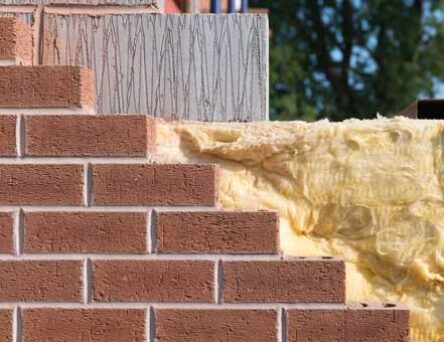
U-Values
The same principle applies to U-values, which measure how much heat is lost through elements such as walls, roofs, floors, windows and doors. In many existing homes, U-values are estimated from construction type and age. Where reliable evidence is available, such as building plans, retrofit documentation, product specifications or calculations, these values can provide a more accurate reflection of the building’s true thermal performance.
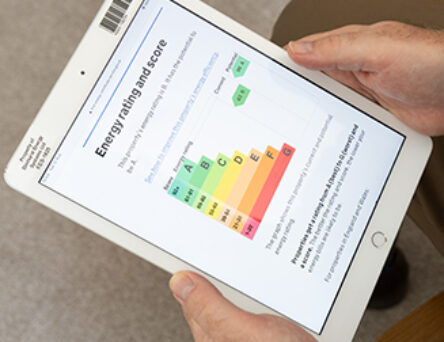
Accurate Documentation of Improvements
Documented improvements are also important. If insulation has been installed, a heating system has been upgraded, solar panels have been added, or other energy efficiency measures have been completed since the last EPC, the existing certificate may no longer reflect the current condition of the home.
From a homeowner perspective, keeping paperwork such as installation certificates, guarantees, product specifications or retrofit documentation can help the assessor use the most accurate information available. Updating the EPC after improvement works also helps ensure the rating and recommendations remain relevant.
Understanding the performance gap
The report examines the difference between modelled and monitored energy use, often referred to as the performance gap. It found that modelled energy use was higher than monitored use in many homes, with average differences of around 16% for gas-heated homes and 31% for electrically heated homes.
This does not mean EPCs are not valuable. It reflects the challenge of using a standardised methodology to assess homes that vary in condition, occupancy and heating behaviour.
The research identifies several factors that can influence results, including ventilation, internal temperatures, solar gains, default values and assessor inputs. By using better data, measured evidence and more up-to-date property information, EPCs can continue to become more representative of real-world performance.

The Future of EPCs: Moving beyond a single headline rating
The report adds further evidence to the EPC reform programme already underway, particularly as the UK moves towards low-carbon heating and a more detailed understanding of building performance.
At present, the headline EPC rating is strongly influenced by energy cost. The report highlights why this matters for electrically heated homes, finding a larger difference between modelled and monitored energy use in these properties than in gas-heated homes. This suggests that some electrically heated homes may appear less favourable under a cost-based rating, even where actual energy use is lower than expected or where the property supports lower-carbon heating.
Elmhurst has previously supported the move towards additional EPC metrics, recognising that they can give users a more complete picture of building performance, including running costs, energy use, carbon impact and fabric efficiency.
The government’s partial response to EPC reform has confirmed a move towards new-style domestic EPCs built around multiple performance metrics, including energy cost, fabric performance, heating system and smart readiness. This is a positive direction of travel, but its success will depend on clear communication, practical guidance and strong consumer education. A multi-metric EPC can help users understand how a home performs from different perspectives, and use that information confidently to support better decisions, lower running costs and progress towards net zero.
Elmhurst’s Thoughts: a positive direction for EPCs
From Elmhurst’s perspective, the report reinforces a message the industry has recognised for some time: EPCs are essential, but they must continue to evolve as better information becomes available.
Their strength lies in providing a standardised way to assess and compare homes. The report does not diminish that role; it shows how EPCs can become even more useful when assessments are supported by accurate evidence and kept up to date.
This is why Elmhurst has continued to support reform that improves understanding while remaining practical for consumers. The move towards multiple EPC metrics is welcome because it can give people a fuller picture of building performance. However, any new approach must remain easy to understand and be backed by clear guidance and strong consumer education.
The key takeaway is not that EPCs are failing. It is that EPCs are important, widely used and capable of becoming even more valuable as the evidence base improves. With better data, updated assessments and clear reform, EPCs can provide an even stronger foundation for improving homes and supporting the transition to net zero.
Read the Report in Full
To read the full report and research completed by DESNZ, please click below.
READ NOW