
Government Consults on Extending Awaab’s Law to Private Rented Homes
The UK Government has launched a new consultation on extending Awaab’s Law to the private rented sector in England, with proposals aimed at ensuring more tenants are protected from dangerous housing conditions, including severe damp and mould.
Published on 9th October 2026, the consultation seeks views on how the existing requirements for social housing could be introduced for private landlords, including the timescales for investigating and addressing serious hazards.
The proposals could extend protections to millions more households, helping to ensure that tenants receive a quicker response when their homes pose a risk to their health and safety.
What is Awaab’s Law and where does it currently apply?
Awaab’s Law was introduced following the tragic death of two-year-old Awaab Ishak in 2020, which was linked to prolonged exposure to mould in his family’s social housing property. The legislation aims to prevent similar tragedies by requiring landlords to investigate and address serious housing hazards within legally defined timescales.
Awaab’s Law currently applies to social housing in England, with requirements being introduced in phases.The first phase came into force on 31st October 2025, covering emergency hazards and serious damp and mould risks. Subject to parliamentary approval, the second phase will take effect from 30th November 2026, expanding the requirements to cover further serious hazards, including:
- Excess cold and heat
- Electrical hazards
- Fire and explosion risks
- Falls and structural safety risks
- Domestic hygiene hazards
A third phase is expected in 2027, extending protections to the remaining hazards covered by the Housing Health and Safety Rating System (HHSRS), except overcrowding.
In Scotland, similar legislation came into force on 6th October 2026 and already applies to both social and private rented homes. Unlike England’s phased approach, Scotland introduced these requirements across both rented sectors from the outset, although the current Scottish legislation focuses specifically on damp and mould.
The latest consultation marks the next step towards bringing similar protections to tenants living in privately rented homes.
What is the consultation proposing?
The Government is seeking views on how Awaab’s Law should apply to private rented properties, recognising the differences between private landlords and social housing providers. The consultation focuses on several key areas:
- Hazards covered: Determining which housing hazards should fall within the new requirements.
- Investigation timescales: Establishing how quickly private landlords should investigate reported hazards.
- Repair requirements: Setting clear expectations for addressing hazards and making properties safe.
- Implementation: Considering when the new requirements should take effect and whether they should be introduced in phases.
The consultation also considers extending Awaab’s Law to certain types of accommodation occupied under licence, including supported housing, temporary accommodation for homeless households and accommodation for young people leaving care. While private landlords already have legal responsibilities to maintain safe properties, Awaab’s Law would introduce clearer timescales and procedures for responding to dangerous conditions.
It is important to note that these requirements are not yet in force for private rented properties. The consultation will help determine how and when they are introduced.
Key Differences Between the Social and Private Rented Sectors
Although Awaab’s Law is already in place for social housing in England, the Government recognises that there are significant differences between the social and private rented sectors that need to be considered before extending the requirements. One of the biggest differences is the number and size of landlords operating in each sector.
The social rented sector has around 1,400 active providers, with the vast majority of properties managed by larger organisations. These providers often have dedicated maintenance teams or established contracts with repair companies. In comparison, the private rented sector has at least 2.3 million landlords, with 82% owning fewer than five properties. Most operate as individuals rather than large organisations and are less likely to have dedicated teams to investigate and carry out repairs.
There are also differences in how the sectors are regulated. Social housing providers are subject to oversight from the Regulator of Social Housing and must meet the Decent Homes Standard. Private landlords are subject to different enforcement arrangements, with further changes being introduced through the Renters’ Rights Act.
These differences could affect how quickly landlords can arrange inspections, organise repairs and meet the proposed timescales.
The Government has made clear that the intention is not to introduce stronger or weaker protections for private tenants, but to ensure the requirements are practical and effective across both sectors. The consultation will therefore consider whether the existing social housing requirements should be applied directly to private landlords or adapted to reflect how the sector operates.
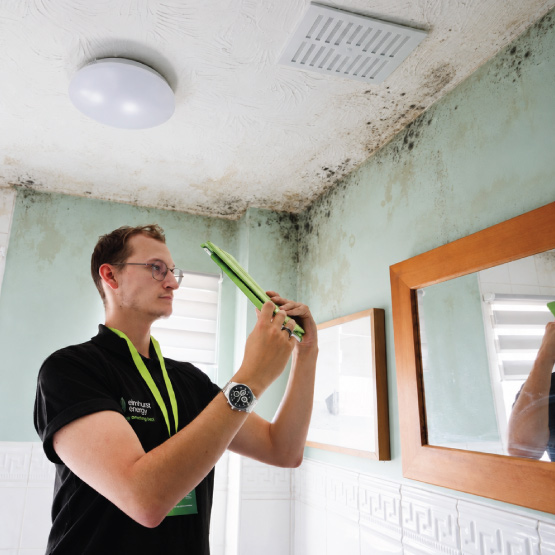
What could this mean for Energy and Retrofit Professionals?
Extending Awaab’s Law could increase the importance of identifying and addressing damp, mould and other housing hazards across the private rented sector.
For energy assessors and retrofit professionals, this may create further opportunities to support landlords in understanding the condition of their properties and identifying potential risks before they become more serious.
Professionals with additional training in damp and mould assessment could be particularly well placed to support this work, providing independent inspections and clear reports that help landlords understand the issues present within a property.
However, the responsibility for arranging and completing any necessary remedial work would remain with the landlord.
The Importance of Professional Expertise
Elmhurst Energy welcomes the opportunity to strengthen protections for tenants across the rented housing sector, helping to ensure that serious hazards are identified and addressed promptly across all rented properties.
Simon Flint, Retrofit Scheme Manager at Elmhurst Energy:
“Everyone deserves to live in a safe and healthy home, regardless of whether they rent privately or through a social housing provider.
“Extending Awaab’s Law could be an important step towards improving housing conditions across England. It also highlights the growing importance of having suitably trained professionals who can identify issues such as damp and mould, understand their potential causes and provide landlords with clear, reliable information.
“With further requirements potentially coming into force, now is a good opportunity for assessors to consider how additional training could help them support landlords and tenants.”
Elmhurst’s Damp and Mould Assessor Training provides professionals with the knowledge and skills to undertake visual assessments of damp and mould, identify potential contributing factors and report their findings.
Next Steps
The consultation is open until 18th December 2026, with responses helping to shape the final requirements and implementation timetable.
Elmhurst Energy will review the proposals and provide a response to the consultation, which will be shared with members.
In the meantime, members and wider industry professionals are encouraged to review the proposals and consider how the changes could affect their work.
Extending Awaab's Law to private rented tenancies and to licences
Read the full government consultation and reply by 18th December below.
Read the Full Government Consultation