
Damp and Mould in Scotland: What Changes on the 6th October?
From 6 October 2026, new requirements for tackling damp and mould will come into force across Scotland, placing clearer responsibilities on both social and private landlords.
The changes introduce defined timescales for responding to reports of damp and mould and reinforce the need for investigations to be carried out by people with the appropriate skills and experience.
For Energy Assessors, Retrofit Assessors and other property professionals, this is an important area to understand and one that could create opportunities to broaden existing skills and support landlords in meeting their responsibilities.
What Is Changing in Scotland?
The Investigation and Commencement of Repair (Scotland) Regulations 2026, commonly referred to as Awaab’s Law, will introduce new requirements for how landlords respond to reports of damp and mould.
From 6th October, social and private landlords in Scotland will be required to:
- investigate reports of damp and mould within 10 working days
- provide a written summary of their findings within three working days
- begin any necessary repairs within five working days of the investigation.
The Scottish Government has also confirmed that investigations and repairs must be carried out by someone with the relevant skills and experience.
The emphasis is not simply on treating visible mould. Landlords will need to identify and address the underlying cause of the problem, helping to prevent issues from recurring.
Why Should Assessors Be Interested?
Damp and mould can be linked to a wide range of factors, including building fabric, ventilation, heating, moisture and how a property is being used.
These are all areas that many energy and property professionals already encounter within their existing work.
For Energy Assessors and Retrofit Assessors in particular, existing knowledge of building construction, ventilation, heat loss and property performance can provide a useful foundation for developing specialist damp and mould assessment skills.
As landlords face greater expectations around how they investigate and respond to reports, there may also be increased demand for professionals who can carry out structured assessments and provide clear, evidence-based findings.
Developing competence in this area can therefore help assessors broaden the range of services they are able to offer while supporting better outcomes for landlords and tenants.
What Is the Assessor’s Role?
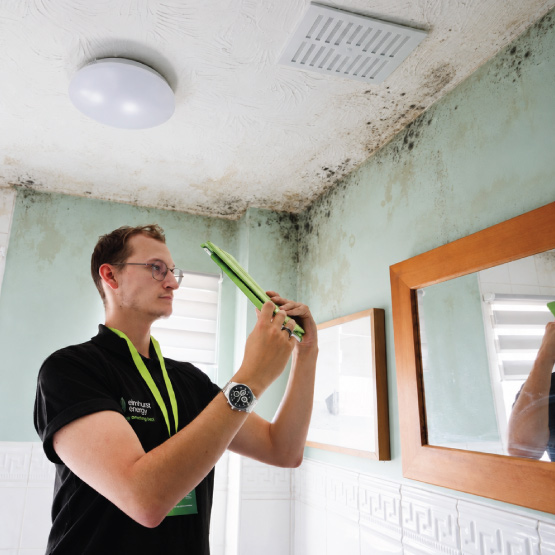
It is important to be clear about the scope of a damp and mould assessment. An Elmhurst Damp and Mould Assessor carries out a visual, non-invasive inspection of the property, recording observations and identifying factors that may be contributing to damp, mould or condensation.
The assessment provides the landlord with clear, evidence-based information about the condition of the property. However, the assessor is not responsible for carrying out remedial works or resolving the issues identified. Responsibility for determining and arranging any necessary remedial action remains with the landlord.
The role of the assessor is therefore to provide a structured and impartial assessment that can help landlords make informed decisions about the next steps required.
How Can Assessors Prepare?
Professionals looking to work in this area should ensure they have the knowledge and practical skills needed to identify different types of damp, mould and condensation, understand their potential causes and assess how building performance and occupant behaviour may contribute to the issue.
Elmhurst’s Damp and Mould Assessor Training has been developed to provide professionals with the practical knowledge needed to carry out competent assessments in domestic properties.
The one-day, tutor-led course covers:
- the different types and causes of damp and mould
- condensation and moisture within buildings
- ventilation and its relationship with indoor air quality
- identifying potential underlying causes
- carrying out a structured property assessment
- recording findings and producing professional reports.
Following successful completion of the training, learners are eligible to join the Elmhurst Damp and Mould Assessor Competency Scheme.
The scheme provides a framework for recognising professional competence in this specialist area and gives members access to Elmhurst’s assessment software, technical support, insurance cover and Find an Assessor directory.
A Growing Area of Importance
The introduction of the new requirements in Scotland is another indication of the increasing focus being placed on damp and mould across the housing sector.
For landlords, having access to appropriately skilled professionals will be an important part of responding effectively to reports and identifying the underlying causes of problems.
For assessors, it presents an opportunity to build on existing knowledge, develop additional expertise and expand into an area that is becoming increasingly relevant across housing, energy efficiency and retrofit.
With the new requirements taking effect from 6 October 2026, now is a good time to make sure your knowledge and skills are ready.
Elmhurst's Damp and Mould Competency Training
Develop the practical skills needed to identify, assess and report on damp and mould hazards in domestic properties.
✅£495 + VAT
✅1-day live online course
✅5 hours Certified CPD
✅Multiple dates available