Your Guide to Airtightness Testing
Airtightness testing helps us understand how much air escapes from a building through gaps and cracks. But what does an airtightness test involve, why might you need one, and what do the results mean?
Whether you’re a homeowner considering having your property tested, the owner or manager of a non-domestic building considering an airtightness test, or someone interested in becoming a qualified airtightness tester, this guide covers the basics of airtightness testing, how the process works, why it is important and what the results mean.
What Is Airtightness?
Airtightness describes how well a building prevents air from escaping through unintentional gaps and cracks in the building fabric.
The more airtight a building is, the less air can escape through these gaps, helping to reduce uncontrolled air leakage. This is important because a more airtight building can lower energy consumption by reducing heat loss, improve occupant comfort by minimising draughts, and enhance the overall performance of the building.
What Does an Airtightness Test Measure?
An airtightness test measures how much unintentional air leaks through a building’s envelope.
Airtightness is assessed by creating a pressure difference between the inside and outside of a building and measuring the airflow required to maintain that pressure difference.
The result is expressed as air permeability, which is calculated by dividing the measured air leakage rate by the envelope area of the building and is expressed in m3/(h.m2). This tells us how airtight a building is; the lower the air permeability result, the less uncontrolled air is escaping through the building envelope.
Under Part L of the Building Regulations in England, new homes and new non-domestic buildings must achieve an air permeability result of 8.0 m3/(h.m2) at 50Pa or below to comply with the regulations.
In practice, most new buildings perform significantly better than this minimum standard. The average new build dwelling achieves an air permeability result of approximately 5.0 m3/(h.m2) at 50 Pa.
For existing homes, a 2025 government-backed study by Loughborough University found that the average air permeability was 8.6 m3/(h.m2) at 50 Pa.
Unlike new builds, there is no general maximum air permeability requirement for existing buildings, unless building work is being undertaken that requires compliance with Building Regulations.
Why Might You Need an Airtightness Test?
One of the main reasons for carrying out an airtightness test is to demonstrate that a new building, whether residential or non-domestic, meets the requirements of the Building Regulations.
However, airtightness testing is not limited to newly constructed buildings. Tests can also be carried out on existing homes and non-domestic buildings.
The results can be used within energy performance calculations, which contribute to a property’s Energy Performance Certificate (EPC).
During testing, diagnostic tools, such as smoke pens, can be used to help identify the locations of air leakage and highlight areas for improvement. Understanding where air leakage occurs can help building owners and occupiers identify opportunities to improve energy efficiency, reduce heating costs, enhance occupant comfort, and address issues such as draughts.
How Is an Airtightness Test Carried Out?
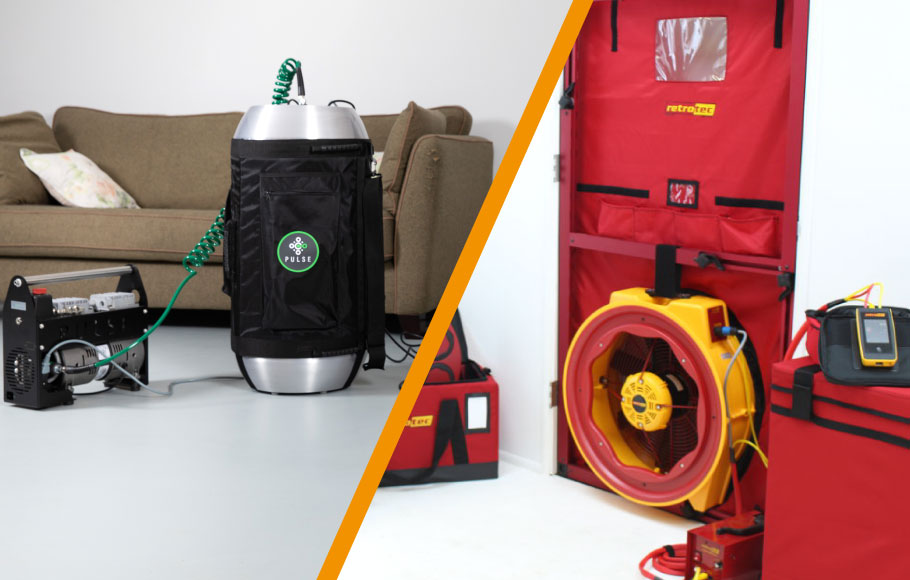
There are two main methods of airtightness testing: blower door testing and pulse testing.
Both are industry-recognised methods that measure how much air escapes from a building and provide a result to assess its airtightness, although they use different equipment and techniques.
Blower Door Testing
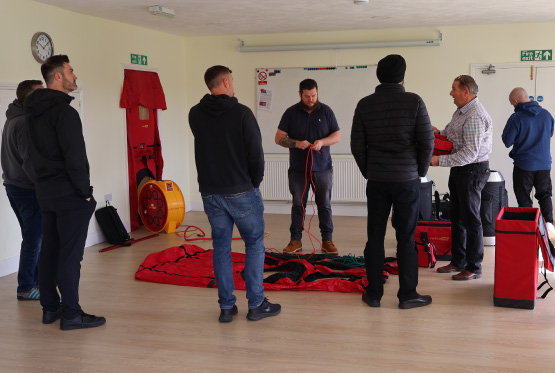
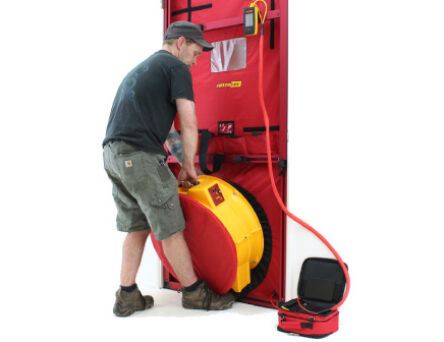
Blower door testing involves fitting specialist equipment into an external doorway, usually at the front or rear of the property.
The equipment uses a fan to create a difference in air pressure between the inside and outside of the building.
Measurements are then taken to calculate how much air is escaping from the property, producing an air permeability result at 50 pascals (Pa).
Pulse Testing
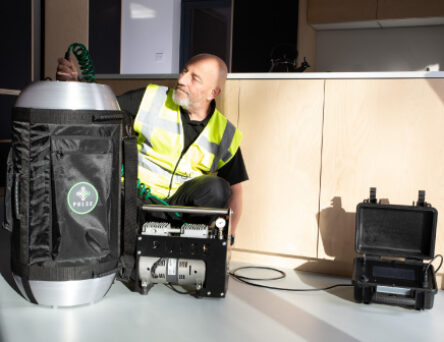
Pulse testing uses equipment positioned in the centre of the property.
Instead of using a fan fitted into a doorway, the equipment releases a short burst of air into the building.
The equipment then takes a series of measurements to calculate the property’s air permeability at 4 pascals (Pa). This result is then converted into an equivalent reading at 50 Pa.
What Do Airtightness Test Results Mean?
Air permeability is calculated using the amount of air leakage measured during the test and the total area of the building’s external surfaces, including its walls, roof and floors.
A lower reading means less air is escaping through unintentional gaps and cracks, indicating that the property is more airtight.
A higher reading means more air is escaping, indicating that the property is less airtight.
The result provides a useful indication of how effectively a building limits uncontrolled air leakage. However, it is important to recognise that air leakage is not a fixed value. An airtightness test measures the building’s air permeability at a specific point in time.
A range of factors can affect airtightness over the life of a building, including changes in temperature and humidity, the natural settling of new structures, the ageing and degradation of building materials, and alterations or refurbishment works. As a result, the air permeability of the same building is likely to change over time, even if no obvious defects are present.
Who Carries Out an Airtightness Test?
Airtightness testing must be carried out by a qualified airtightness tester. Although registration with a recognised scheme, such as the Elmhurst Airtightness Scheme (EAS), is not mandatory, accreditation provides building owners with additional assurance that testing is carried out competently and in accordance with the required standards.
Following the test, a certificate confirming the property’s airtightness result will be provided to the building owner.
Elmhurst’s Role in Airtightness Testing
Elmhurst provides training and accreditation for airtightness testers, helping professionals develop the skills and knowledge needed to carry out airtightness tests while maintaining high standards across the industry.
Through the Elmhurst Airtightness Scheme (EAS), accredited testers benefit from access to our lodgement portal to create airtightness test certificates, alongside expert support from our team of technical advisers.
Under the scheme, Elmhurst also carries out regular auditing and surveillance to help ensure accredited testers continue to meet the latest regulatory requirements.
Looking for an Airtightness Tester?
If you’re a building owner looking to arrange an airtightness test, you can find a qualified, Elmhurst-accredited tester in your area through the Elmhurst Airtightness Scheme.
FIND AN ACCREDITED AIRTIGHTNESS TESTER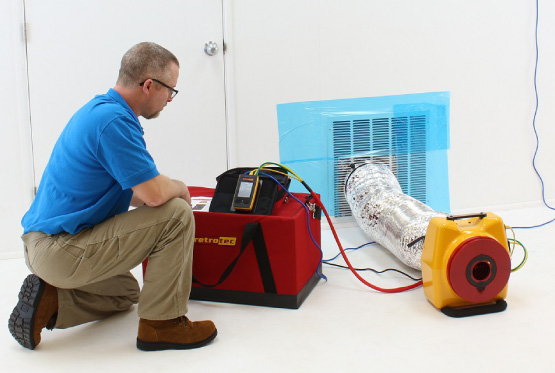
Interested in Becoming an Airtightness Tester?
If you’re considering a career in airtightness testing, Elmhurst offers training and accreditation to help you develop the skills and qualifications needed to carry out airtightness tests.
EXPLORE AIRTIGHTNESS TRAINING