
Scottish Government confirms EPC reform delayed until April 2028
The Scottish Government has confirmed that major reforms to Energy Performance Certificates (EPCs) in Scotland will now come into force on 30 April 2028.
The reforms, introduced through the Energy Performance of Buildings (Scotland) Regulations 2025, had originally been scheduled to take effect on 31 October 2026. However, following an initial delay announced in March 2026, the Scottish Government has now set a revised implementation date for both domestic and non-domestic EPCs.
The revised timetable is intended to align Scotland with the wider UK implementation of EPC reform and allow sufficient time for the Home Energy Model (HEM), supporting infrastructure and assessor training to be completed ahead of launch.
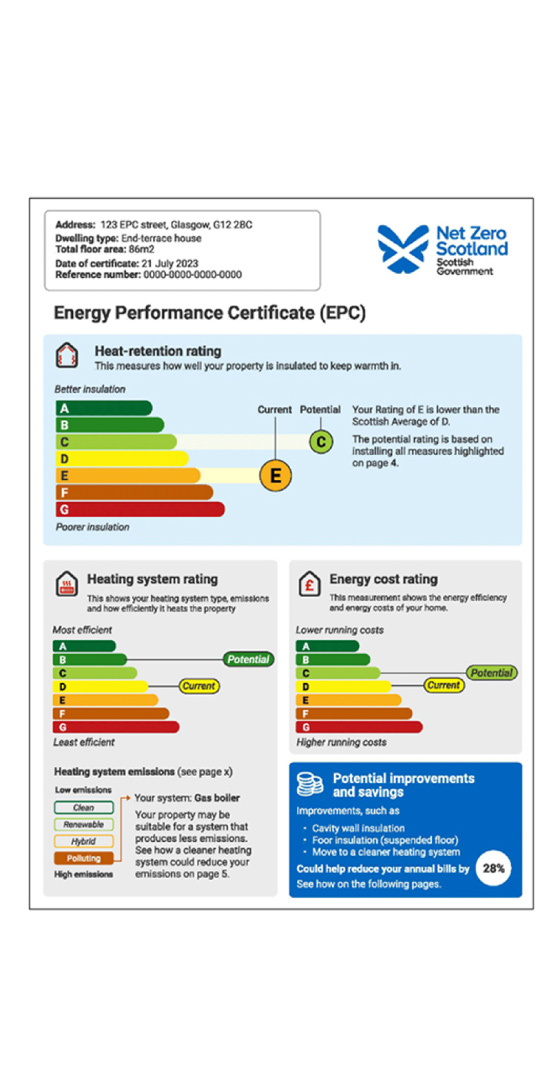
What is changing under the 2025 Regulations?
The reforms represent a significant change to the way EPCs are produced and presented in Scotland. Key changes include:
- New EPC ratings: Domestic EPCs will introduce three headline metrics covering Heat Retention, Heating System and Energy Cost, providing a broader picture of a property’s energy performance. Non-Domestic EPCs will also have a new rating system consisting of Energy Performance Rating, Energy Use Rating and Direct Emissions Rating.
- Shorter EPC validity: The validity period for domestic and non-domestic EPCs will reduce from 10 years to 5 years.
- Redesigned EPCs: Certificates will be redesigned, with greater use of a digital interface intended to make energy performance information more accessible and easier for consumers to understand.
- Stronger quality assurance: The reforms include changes to accreditation, assessor oversight and auditing, including the introduction of an onsite audit regime. This has been confirmed to
- A move to HEM: The Home Energy Model will replace SAP/RdSAP as the underlying methodology for new domestic EPCs.
For a more detailed breakdown of the changes being introduced to Scottish EPCs, read Elmhurst’s earlier update below
READ THE FULL UPDATEScottish EPC Register fees will still increase in October 2026
Although the main EPC reforms have been delayed, the planned increase to tZhe Scottish EPC Register lodgement fee, charged by the Keeper of the Register, will still take effect on 31 October 2026.
The central register fee will increase:
- from £2.60 to £6.00 for domestic properties
- from £12.10 to £15.50 for other properties
Why are the fees increasing?
Elmhurst has raised the increase in EPC lodgement fees directly with the Scottish Government to better understand the reasons behind the change and its timing. We have been advised that the additional income will help support the costs of preparing for wider EPC reform, including changes to the register, calculation methodologies and enhanced audit arrangements. Some of this work is already underway, and the associated costs are already being incurred ahead of implementation.
Elmhurst will continue to engage constructively with the Scottish Government and represent members’ interests as these reforms progress.
Increased Quality Assurance and Onsite Audits
As with the increase in Scottish EPC Register fees, elements of the new quality assurance framework are expected to be introduced ahead of the main EPC reform implementation date.
The Scottish Government has advised Elmhurst that it is aiming to launch the new onsite audit regime in the second half of 2027. It has also said it will continue to engage with industry as the design develops, with the intention of giving Accreditation Organisations and their members sufficient notice before the new arrangements go live.
Elmhurst will keep members updated as further details are confirmed.

When will the new regulations come into force?
The remaining provisions of the Energy Performance of Buildings (Scotland) Regulations 2025 will now come fully into force on 30 April 2028.
The Scottish Government says the additional time will help ensure HEM and the supporting technical infrastructure are ready, while giving the assessor industry sufficient time to complete the necessary training and prepare for implementation.
A phased transition will also apply to help minimise disruption to property owners, assessors and the wider property market.
Transitional Arrangements
Existing Domestic and Non-Domestic Buildings
For existing domestic and non-domestic buildings being sold or let, a one-year transitional period will run from 30 April 2028 to 30 April 2029.
During this period:
- A valid existing EPC produced under the 2008 Regulations may continue to be used for a sale or let.
- Any new EPC commissioned from 30 April 2028 must be produced under the new 2025 Regulations.
- If a property using an existing EPC is sold or let again during the transition period, a new-style EPC will be required.
- From 30 April 2029, only new-style EPCs produced under the 2025 Regulations will be accepted for properties being sold or let.
The transition is designed to prevent a sudden surge in demand for new EPCs when the regulations come into force and give the assessor and property markets time to adapt to the new system.
Large non-domestic buildings
Different transitional arrangements will apply to certain large non-domestic buildings that are frequently visited by the public and are required to display an EPC.
These buildings will be able to continue displaying an existing EPC produced under the 2008 Regulations until either:
- the EPC reaches the end of its validity period; or
- 30 April 2033, whichever comes first.
After 30 April 2033, all buildings covered by these requirements will need to display a new-style EPC produced under the 2025 Regulations.
New Build Homes
For new buildings completed on or after 30 April 2028, a valid new-style EPC will need to be provided to the building owner within seven days of the completion certificate being submitted to the local authority verifier.
The Scottish Government has also confirmed that the next changes to Building Standards, which are expected to use HEM, are currently planned for Autumn 2029. This creates an interim period where SAP may continue to be used for Building Standards compliance while HEM is used for EPC production, and further detail will be needed on how this will operate in practice for the new build sector.
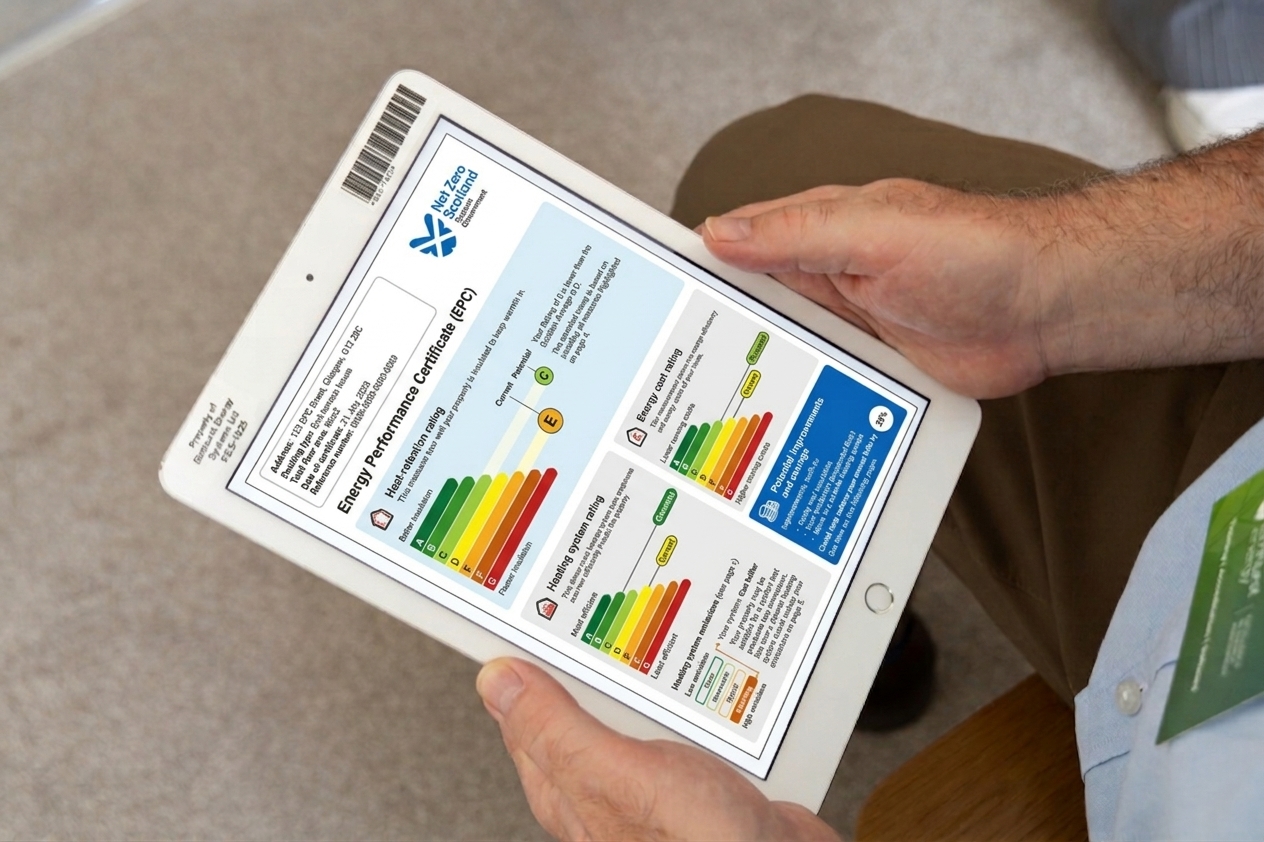
Energy Performance of Buildings (Scotland) Regulations 2025 - EPC Reform Consultation
To read the full Scottish Government response and recent updates, click below.
FIND OUT MORE