
National Planning Policy Framework: What It Means for Local Energy Efficiency Standards
The relationship between national planning policy and local climate ambitions is back under the spotlight, as reforms to the National Planning Policy Framework (NPPF) continue to shape how councils approach energy efficiency requirements for new housing developments across England.
We take a look at recent developments and how they affect the energy efficiency and retrofit industry.
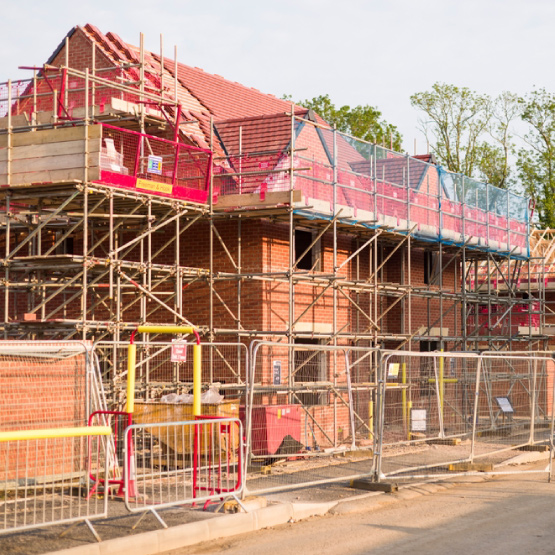
What is the National Planning Policy Framework (NPPF)
The National Planning Policy Framework (NPPF) sets out the government’s planning policies for England and how these should be applied by local authorities when preparing local plans and making decisions on planning applications.
It provides the national framework for issues including housing delivery, sustainable development, infrastructure, climate change and the built environment, while allowing local planning authorities to develop policies that respond to the needs of their area.
The NPPF is therefore an important part of how national priorities are translated into local planning requirements, including those relating to the energy performance of new development.
How is this relevant for the energy efficiency industry?
Proposed revisions have been closely linked to the government’s drive to accelerate housing delivery while maintaining commitments to net-zero carbon targets and sustainable development.
In the context of energy efficiency, an important area under review is whether local planning authorities should be able to require energy performance standards that exceed national Building Regulations. The issue has become increasingly significant as councils seek to respond to local climate emergency declarations and rising concerns about household energy bills.
Government Pushes for National Consistency
Some local authorities have introduced planning policies requiring higher energy efficiency standards than those set nationally through Building Regulations.
In December 2023, the then government issued a Written Ministerial Statement which set out a preference for greater consistency across England. It stated that local authorities were not generally expected to introduce energy efficiency standards beyond current or planned Building Regulations, with concerns that differing local requirements could create additional complexity and cost for housebuilders.
The statement did not prevent councils from going further altogether. Where higher local standards were proposed, these needed to be supported by a clear and robustly costed rationale, including consideration of development viability.
At the time, the government also pointed towards the Future Homes Standard as the route to delivering a more consistent national approach to improving the energy performance of new homes.
Legal Challenge Changes the Landscape
The 2023 Written Ministerial Statement was subsequently challenged through the courts. In July 2025, the Court of Appeal dismissed the challenge. However, the case provided further clarification around the relationship between national planning policy and the powers available to local planning authorities when setting energy efficiency requirements.
The judgment did not remove the 2023 position, but the wider question of how far councils should be able to go beyond Building Regulations remained an important part of the government’s wider review of the NPPF.
The NPPF Consultation and Outcome
On 16 December 2025, the government launched a consultation on proposed reforms to the NPPF. This included a proposal to restrict local authorities from setting higher energy efficiency standards for residential development by commencing section 43 of the Deregulation Act 2015.
The proposal received significant opposition, with 8% of respondents partly disagreeing and 54% strongly disagreeing.
Following the consultation, the government confirmed on 17 August 2026 that it would not introduce this restriction at this time.
Instead, the updated NPPF continues to allow local authorities to set energy efficiency standards that go beyond Building Regulations, provided they are properly justified.
The following was specifically included in regards to energy efficiency standards;
“Energy efficiency, for which any standards that go beyond the current or proposed Building Regulations should have a clear and robustly costed rationale which shows that there will not be an adverse impact on the viability and deliverability of development. Any such standards should be expressed as a percentage uplift of a dwelling’s Target Emissions Rate (TER) calculated using a specified version of the Standard Assessment Procedure (SAP) or other approved calculation methodology.”

What does this mean for energy assessors?
New Build Dwellings manager Jason Hewins commented;
“Many OCDEAs will already be familiar with completing ‘energy statements’. The NPPF consultation response confirms that local authorities will still be able to introduce policies requiring the use of SAP and/or HEM to demonstrate improved performance beyond Building Regulations.
With the introduction of the Future Homes Standard in 2027, we expect many existing local policies will need to be reviewed. The NPPF response also states that any policies going beyond Building Regulations should use the TER as the metric for demonstrating performance.
This should help improve consistency across the country, where differing local metrics can currently create uncertainty for both assessors and housebuilders”
The National Planning Policy Framework
Read the full National Planning Policy Framework by clicking below
READ NOW