
The Future Homes Standard is Coming: Are Your Skills Ready?
With the Future Homes Standard confirmed and regulations coming into force in March 2027, the clock is ticking. The professionals who invest in their skills now will be the ones leading the market when it matters most, and Elmhurst’s Next Level Training Initiative offers discounted courses to help you stay ahead of evolving industry demands.
The final Approved Documents for the Future Homes Standard (FHS) were published on 24 March 2026, with the first wave of regulations for non high risk buildings coming into force on 24 March 2027 followed by those high risk building in September 2027. After a number of years of consultation and anticipation, the industry now has its confirmed requirements and a firm implementation date. For energy professionals, this window before enforcement is not time to wait and see, it is time to act.
What is the Future Homes Standard
The Future Homes Standard (FHS) is a new set of Building Regulations for England that will significantly improve the energy efficiency and carbon performance of new homes. According to Elmhurst Energy, the FHS aims to ensure that homes built from its introduction are “zero‑carbon ready”, producing 75–80% lower carbon emissions than homes built to 2013 standards.
Under the FHS, fossil‑fuel heating systems such as gas and oil boilers will no longer be permitted in new homes. Instead, compliance is expected to be achieved through low‑carbon technologies including heat pumps, low‑carbon heat networks, and on‑site renewable electricity generation, with a new functional requirement for solar PV on homes where feasible.
Elmhurst notes that the standard is designed to avoid the need for future retrofit by aligning new homes with the decarbonisation of the electricity grid, while tightening targets for primary energy use and carbon emissions through updates to SAP and the Future Homes Standard notional dwelling.
Don’t Wait for HEM – SAP 10.3 Is Ready Now
Much of the industry’s attention has been focused on the Home Energy Model (HEM), the new calculation methodology originally intended to underpin FHS compliance. But HEM is not yet ready as an approved route. In February 2026, MHCLG confirmed that a modified version of SAP 10, known as SAP 10.3, will initially be the only methodology used to demonstrate compliance.
This is significant for On-Construction Domestic Energy Assessors (OCDEAs). Elmhurst’s Design SAP 10 software has already been approved for the SAP 10.3 methodology by BRE, and is now live. If you know SAP, then the transition to 10.3 should be manageable, as the core methodology is unchanged. The main changes to align with SAP 10.3 and Part L 2026 is updates to the notional dwelling specification, updated carbon factors, and the addition of the PV functional requirement to the compliance reporting.
Airtightness: A Step Change in Construction Quality
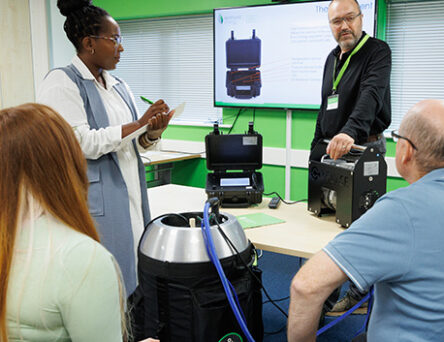
The FHS notional dwelling assumes an airtightness of 4 m³/(h·m²) at 50 Pa, tightened from the Part L 2021 notional value of 5 m³/(h·m²). With typical new builds currently achieving 4–6 m³/(h·m²), the FHS notional target demands a step change in construction quality. This isn’t a target that can be achieved through design alone, it requires rigorous on-site delivery and independent verification. Qualified airtightness testers will be an essential part of every new build project. At this level of airtightness, mechanical ventilation becomes essential to maintain indoor air quality. The relationship between airtightness and ventilation strategy is therefore critical, and professionals who understand both are uniquely well-positioned in this market.
This course is part of our Next Level Training Initiative. Save 10% when you book now👇

Overheating: The Other Side of the Coin
There is an inherent tension at the heart of the FHS. Build tighter, insulate better, add more glazing for solar gain and you risk creating homes that become uncomfortably hot in summer. The FHS works alongside Part O of the Building Regulations, which sets requirements for controlling solar gains and providing adequate ventilation during warm weather. Highly insulated, airtight homes can be prone to overheating in summer.
Overheating is amplified in well-insulated, airtight buildings, so designers will need to pay close attention to requirements set out in Part O. Overheating assessment is no longer a niche specialism, it is a core requirement on every new-build residential project. Professionals with the skills to model and assess overheating risk will find themselves in high demand as the industry scales up to meet FHS requirements.
Ventilation Under Part F: Commission, Verify, Explain
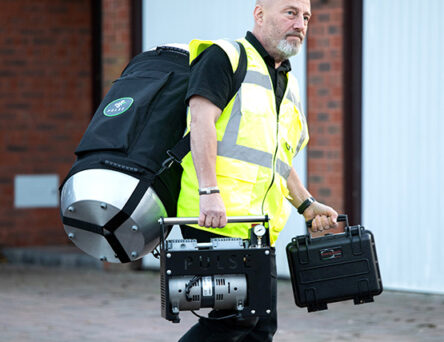
The update to Approved Document F that accompanies the FHS reflects a more holistic understanding of building performance. With homes becoming more airtight, Part F strengthens requirements around proper design, with more conscious thought of ductwork, internal noise and air quality, as well as proper commissioning and verifiable testing.
The 2026 update shifts the focus towards how ventilation systems are commissioned, verified and understood by the end user, reflecting a wider industry recognition that performance gaps often arise not from design, but from poor installation or lack of user understanding. Ventilation commissioning and testing is therefore now a distinct and valued professional skill and one that sits squarely within the competence profile of the modern energy and building performance professional.
U-Values and Psi-Values: Precision Matters More Than Ever
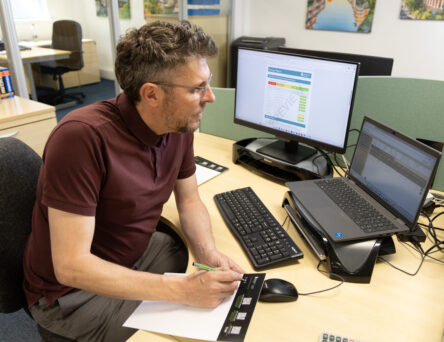
Under the FHS, the fabric of the building matters more than it ever has. The whole-building performance approach means that every element contributes to, or detracts from, compliance. You can trade off between fabric, heating, ventilation, and renewables, as long as the overall performance meets or exceeds the target. But that flexibility only works when the inputs are accurate.
Inaccurate U-values or poorly calculated Psi-values (thermal bridge calculations) will either produce a misleading compliance result or force conservative assumptions that penalise the design unnecessarily. Under HEM’s more accurate modelling, missing data triggers punitive default values that are far more severe than in SAP. Professionals who can produce robust, evidence-based U-value and Psi-value calculations rather than relying on default assumptions will deliver real competitive advantage to the developers and designers they work with.
These courses are part of our Next Level Training Initiative. Save 10% when you book now👇
Skills Are the Bottleneck
The Future Homes Standard is not just a regulatory update. It represents a fundamental shift in what competence means for energy and building performance professionals. The industry needs people who can assess compliance using SAP 10.3 today, who understand the direction of travel towards HEM, who can test airtightness to the required standard, assess overheating risk under Part O, verify ventilation commissioning under Part F, and calculate accurate fabric performance values with confidence.
The government’s net zero and energy security ambitions depend on those skills existing at scale and right now, the pipeline is not keeping pace with the demand that is coming.
At Elmhurst Energy, we are delivering the training and qualifications that energy professionals need to meet this moment. Whether you are an existing OCDEA looking to update your Part L knowledge for SAP 10.3, or a professional seeking to add airtightness testing or overheating assessment to your skill set, now is the time to invest.
The Future Homes Standard comes into force in March 2027. The professionals who will be ready for it are the ones training today.

Head of Training Josh Wakeling comments;
“The Future Homes Standard represents the most significant change to new-build energy performance requirements in a generation. The skills gap it exposes is real but it is also an opportunity. Energy professionals who act now to develop competence across SAP 10.3, airtightness, overheating, and ventilation will be at the forefront of delivering the homes the UK needs to meet its climate commitments.”
Are You Ready to Take Your Skills to The Next Level?
Learn more about how you can go from competent to confident by booking onto one of our expertly selected and discounted courses designed to help take your career to the next level. Exclusive to Elmhurst Members.
FIND OUT MORE