
MHCLG release the Future Homes Standard
On 24th March 2026 The Ministry of Housing, Communities and Local Government (MHCLG) published the long awaited Future Homes Standard. The Future Homes Standard is the next revision to Part L of the Building Regulations in England. It was first presented to the industry in a consultation in 2019, with a further consultation issued in 2023. The responses to the consultation can be found here and new Approved Document L 2026 is now available and can be found here. This article examines the key changes introduced;
The Future Homes Standard – The Detail
Uplift to Performance Standards – The Future Homes Standard aims to deliver new homes that achieve net zero carbon emissions as the electricity grid decarbonises. To achieve this two uplift options over Part L 2021 were outlined, both using similar fabric performance to Part L 2021 but switching a gas boiler to a heat pump for space and water heating;
- Option 1: PV, dMEV ventilation with an airtightness test score of 4 m3/m2/hr @ 50 Pa, WWHRS.
- Option 2: No PV or WWHRS. Natural ventilation with an airtightness test score of 5 m3/m2/hr @ 50 Pa.
The consultation responses have confirmed that option 1 will be chosen to form the basis of the notional dwelling responsible for setting the performance standards in the Future Homes Standard. By using a heat pump and PV in the notional dwelling this effectively ends the use of fossil fuel heating in new homes.
Performance Metrics – Part L 2021 currently uses the Primary Energy Rate (DPER), Carbon Emissions (DER) and Fabric Energy Efficiency (DFEE) as the energy efficiency standards all new homes must meet. These are calculated using the national calculation methodology, which is SAP 10.2 currently.
The consultation responses confirmed the same three metrics will be retained for the Future Homes Standard. Again, these will be calculated using the national calculation methodology approved by Government.
National Calculation Methodology – In regards to the national calculation methodology used to demonstrate compliance with the energy efficiency standards in Future Homes Standard it was initially proposed to use the Home Energy Model (HEM), with a ‘FHS’ wrapper as a replacement to the current Standard Assessment Procedure (SAP).
However, in February 2026 MHCLG confirmed a modified version of SAP 10, known as SAP 10.3, will initially be the only methodology used to demonstrate compliance. The Home Energy Model is not currently ready to be an approved methodology for this purpose however this is expected at least three months from publication of the Future Homes Standard.Elmhurst’s Design SAP 10 software has already been approved for the SAP 10.3 methodology by BRE and now the Future Homes Standard has been released, it is ready to be made live as soon as possible. Elmhurst members will be receiving communications in due course outlining the next steps and when the software will become available.
Elmhurst’s Design SAP 10 software has already been approved for the SAP 10.3 methodology by BRE and now the Future Homes Standard has been released, it is ready to be made live as soon as possible. Elmhurst members will be receiving communications in due course outlining the next steps and when the software will become available.
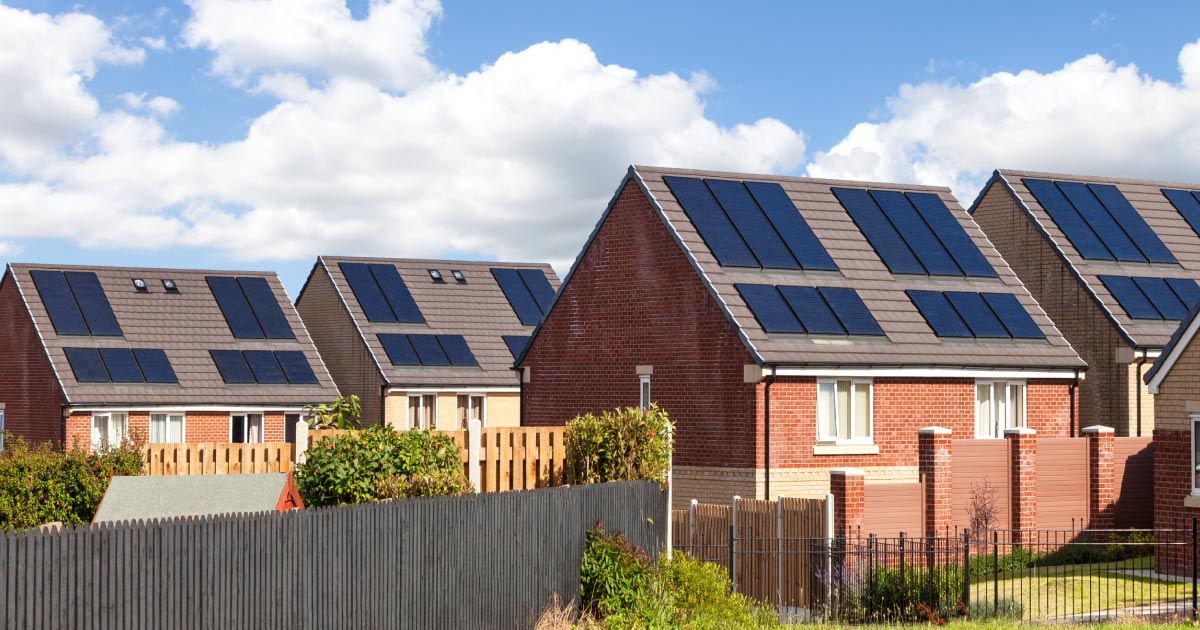
A requirement for renewable energy generation – a new functional requirement has been implemented into schedule 1 of the Building Regulations stipulating a minimum amount of renewable energy generation on new homes. In the vast majority of homes this will be delivered by photovoltaic panels as they are the most established and cost effective way of meeting this requirement. The intent of this is to essentially mandate the installation of photovoltaic panels on new homes to reduce fuel bills and carbon emissions.
Additional guidance is contained in the Approved Document in regards to scenarios where complex roof designs may limit the installation of sufficient photovoltaic panels to a point where the minimum requirement cannot be met.
Changes for Material Change of Use – For material change of use AKA conversions some significant changes were proposed. In order to facilitate the switch to low carbon heating systems the compliance standards were proposed to use the same three metrics as a new home; Primary Energy, Carbon Emissions and Fabric Energy Efficiency. These would be calculated by SAP and HEM but using a different notional dwelling to a newly constructed home.
The consultation responses show that the current method for calculating compliance will remain, with a further consultation on changes to the standards for this type of work to come later.
Changes to Part F – Ventilation
Of course changes to Part L specifically in the areas of airtightness, need to be reflected in Part F. Changes proposed for work to Ventilation systems included;
- New ventilation systems installed in new and existing homes must be commissioned by a member of a competent person’s scheme or by the Building Control Body.
- Powered flow hoods must be used for commissioning new ventilation systems and rotating vane anemometers will no longer be permitted.
The consultation response did not give much information on the above but did confirm Competent Persons Schemes are currently under review with the Building Safety Regulator.
Changes to Part O – Overheating
The consultation responses confirmed a full technical review of Part O will be undertaken with a review of adopting the updated CIBSE TM59.
Timelines and transitional arrangements
MHCLG have confirmed that the new regulations will come into force on 24th March 2027. Following this there will be a twelve month transitional period as per previous changes to Part L of the Building Regulations.
From 24th March 2027 any homes subject to Building Regulations will need to be constructed to the Future Homes Standard. For homes that are already under construction they will be able to be completed to the version of Part L that was in place when construction commenced.
For dwellings currently benefiting from sites under older transitional arrangements these will be ended. Known as ‘sunsetting older transitional arrangements’ for dwellings currently covered by older transitional arrangements, where work has not commenced on plots within the transition period, they will have to be constructed to the Future Homes Standard.

A clear pathway for compliance through SAP 10.3
The decision to use SAP 10.3 at the sole route to compliance on the launch of the Future Homes Standard, provides immediate clarity and continuity for assessors. As an evolution of an established methodology, SAP 10.3 allows members to continue working with familiar processes and software, avoiding unnecessary disruption at a time of significant regulatory change.
Importantly, it ensures there is a fully approved and supported solution available from day one. While the Home Energy Model remains the future direction, and Elmhurst is actively working on their Design: HEM software solution, the delayed introduction avoids the need for assessors to adopt a fundamentally new approach alongside the rollout of the Future Homes Standard.
In practice, this means Elmhurst members can demonstrate compliance with confidence using tools they already understand, supported by existing guidance and infrastructure.
Supporting Elmhurst members with the transition to the Future Homes Standard
The introduction of the Future Homes Standard marks a significant step change for the industry. Elmhurst is well placed to support assessors and organisations as these changes take effect, as we have always done through previous industry developments. Our independence, extensive industry experience and high-quality support mean our sole focus is on helping members succeed, with access to some of the most robust resources, guidance and software in the industry.Over the coming weeks, a full range of resources will be released to help Elmhurst members stay informed and support their clients in understanding what these changes mean in practice.
Jason Hewins, New Build Dwellings Scheme Manager comments:
“It’s been a long journey but Elmhurst are pleased to see the publication of the Future Homes Standard. This is a hugely significant milestone for the industry effectively mandating low carbon heating and on site renewable energy generation in new homes.
We are pleased to see the MHCLG take the pragmatic step of allowing SAP 10.3 to be used to demonstrate compliance until the Home Energy Model is ready to take over. This will allow assessors to assess compliance for their clients efficiently using applications that are familiar and supported by clear conventions and guidance. Elmhurst will continue to support the MHCLG with the implementation of the Home Energy Model to ensure its roll out is as smooth as possible for the industry.
The proposals are broadly as expected. Elmhurst will be releasing various supporting resources for members in the coming weeks to help you understand the impact of the changes being introduced.”
The Future Homes Standard: Everything You Need to Know
Want to get up to speed straight away on the future Homes Standard? Book one of our remote webinars with New Build Dwellings manager, Jason Hewins, to get all the latest updates on the release.
Available Dates: 30th March @ 3pm & 31st March @ 10am
Further Resources
Consultation outcome: https://www.gov.uk/government/consultations/the-future-homes-and-buildings-standards-2023-consultation
Approved Doc part L: https://www.gov.uk/government/publications/approved-document-l-2026
Approved Doc Part F: https://www.gov.uk/government/publications/approved-document-f-2026