
ECO Scheme to End After March 2026
The Government has confirmed that the Energy Company Obligation (ECO), the government scheme that requires energy suppliers to pay for insulation and heating upgrades in the homes of people in fuel poverty, will end in March 2026.
The Chancellor, Rachel Reeves announced this in yesterday’s long-awaited Budget statement in the House of Commons:
“One of the greatest drivers of the rising cost of living is the cost of energy prices. The cause of high energy bills must be tackled at the source, and so we are investing in energy security, in nuclear and renewable energy, and in insulation through our Warm Homes Plan.
But that is not enough, when people are struggling with energy bills today. The Conservative’s ECO Scheme was presented as a plan to tackle fuel poverty. It costs households £1.7 billion a year on their bills, and for 97% of families in fuel poverty, the scheme has cost them more than it has saved. It is a failed scheme and so I am scrapping it along with taking other legacy cost off bills”
Currently, ECO is paid by all households through a levy on their electricity bills, and the help only goes to households in fuel poverty. Under the new plans, that support will instead come directly from government schemes, such as the Warm Homes Plan, funded through general taxation rather than added to charges on electric bills.
According to the government’s official Budget 2025 document, removing ECO from electricity bills is expected to cut the average household energy bill by about £59, making up a large chunk of the overall £150 saving ministers say will come from moving several green levies into general taxation.
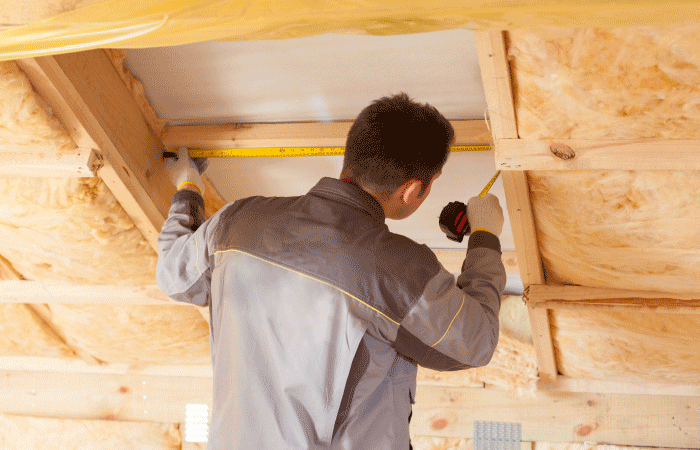
What is the Energy Company Obligation (ECO)
The Energy Company Obligation (ECO) is a government scheme administered by Ofgem that began in 2013 and has run in several phases ever since. Its purpose is to improve energy efficiency in the homes of people in fuel poverty by requiring medium and large energy suppliers to fund upgrades such as insulation or heating improvements. These measures are designed to make homes cheaper to heat and reduce energy use. Since 2013, around 2.5 million homes in the UK have benefitted from ECO funding, with 4.6 million energy efficiency measures installed.
ECO has gone through multiple versions (ECO1, ECO2, ECO3 and now ECO4). The current phase, started in 2022 and is due to run until 31 March 2026.
This announcement comes after the ECO scheme was thrust into the spotlight by a recent National Audit Office (NAO) report, published in October 2025, which uncovered serious failings in ECO and the linked Great British Insulation Scheme (GBIS). It found that many of the home “improvements” funded by ECO were carried out to a poor standard, with external wall insulation in particular flagged as a major problem.
A Pivot to the Warm Homes Plan
All eyes now turn to the Government’s long-awaited £13.2 billion Warm Homes Plan, which is expected to take over as the main framework for upgrading homes once ECO ends. The Chancellor has also indicated that the remaining £1.5 billion set aside for ECO will be rolled into this new programme via direct taxation.
One part of the Warm Homes Plan is the Warm Homes: Social Housing Fund, which is already up and running and relies on the retrofit sector to deliver. Through this fund, social landlords are receiving support to upgrade homes below EPC band C with better insulation, ventilation, solar panels and low-carbon heating, with the current Wave 3 programme set to run through to 2028.
Crucially, all this work must be completed by TrustMark registered, Retrofit professionals (Retrofit Assessors, Retrofit Coordinators and Retrofit Installers) using a whole-house, approach as outlined in PAS 2035:2023.
When can we expect the Warm Homes Plan to be released?
At the time of writing, it is unclear when the full plan and policy document will be made available – the government has only confirmed that this will be done by the end of the year however, Elmhurst calls upon the government to expediate this announcement ideally within the next week. The Warm Homes Plan may also provide clarity on Minimum Energy Efficiency Standards (MEES) for both the domestic and non-domestic sectors, so it is critical to get clarity on the plan, details on funding commitments and also on related regulations that will utilise the funding.
Andrew Parkin, Elmhurst’s Technical Development Director, said:
“For retrofit assessors and coordinators, the end of ECO doesn’t mean the work disappears, it simply moves into a new landscape. We’re already seeing large volumes of activity through the Warm Homes: Social Housing Fund, which is being delivered using whole-house, multi-measure approaches and the expertise of trained retrofit professionals.
It’s reasonable to expect that the wider Warm Homes Plan will follow a similar direction, but the sector now needs clarity. Assessors and coordinators are ready to deliver at scale, but government must set out the details of the new framework sooner rather than later so the industry can plan confidently and keep momentum.”
Related Links:~
https://www.gov.uk/government/collections/budget-2025
https://www.ofgem.gov.uk/environmental-and-social-schemes/energy-company-obligation-eco
https://www.gov.uk/government/news/help-to-save-households-money-and-deliver-cleaner-heat-to-homes